World War II

Italy
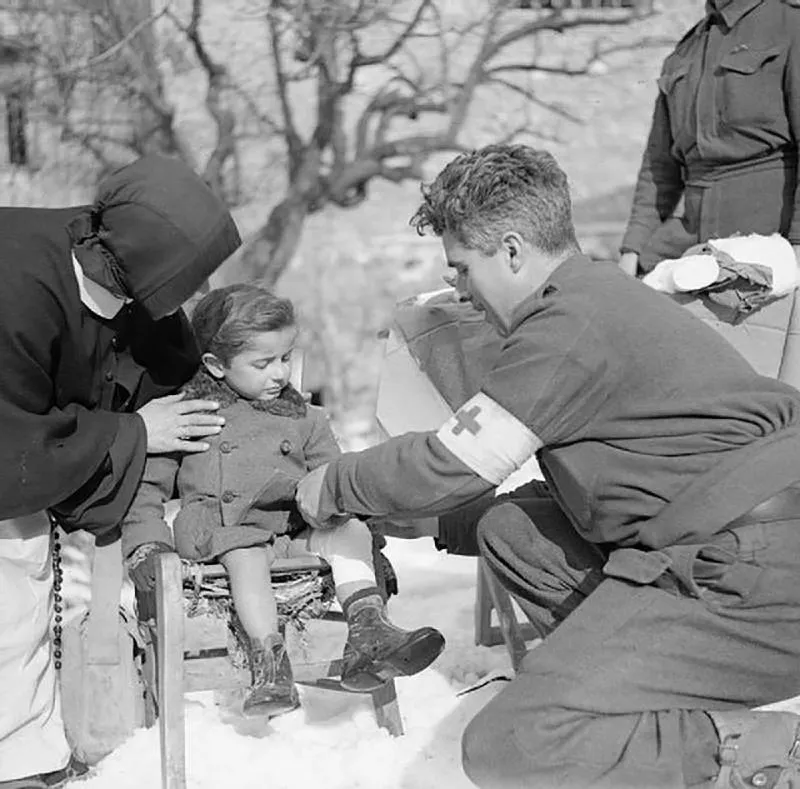

Brazil maintained a stance of neutrality, engaging in trade with both Allied and Axis powers. However, as World War II progressed, diplomatic and economic pressures, particularly from the United States, prompted Brazil to align more closely with the Allies. This shift was solidified after a series of aggressive actions by German submarines, notably the sinking of multiple Brazilian merchant vessels in August 1942, resulting in over 600 civilian deaths. In response, Brazil declared war on Germany and Italy on 22nd August 1942.
Subsequently, the Brazilian Expeditionary Force (Força Expedicionária Brasileira, FEB), comprising of approximately 25,300 troops, was deployed to the Italian front between 1944 and 1945. The FEB participated in key operations, including the Battle of Monte Castello, contributing to the Allied advance in Europe.
Brazil’s naval forces also played a crucial role in the Battle of the Atlantic, engaging in anti-submarine warfare to protect Allied shipping routes. The FEB suffered 510 combat-related deaths, while the Brazilian Navy lost 492 personnel during maritime engagements. Civilian losses were significant due to Axis submarine attacks on merchant vessels, leading to the deaths of 470 merchant mariners and 502 passengers. These attacks not only caused loss of life but also instilled widespread fear and disrupted coastal communities.
The war acted as a catalyst for Brazil’s economic transformation. The disruption of global trade routes and the need for strategic materials led to increased industrialisation and diversification of the Brazilian economy. A notable development was the establishment of the Companhia Siderúrgica Nacional (National Steel Company) in 1941, financed through agreements with the United States. This initiative aimed to reduce reliance on imported steel and bolster domestic production. The demand for rubber surged after Japanese forces occupied Southeast Asian plantations. In response, Brazil initiated the “Battle for Rubber,” recruiting approximately 55,000 workers, known as “rubber soldiers,” to harvest latex in the Amazon rainforest. However, the program faced challenges, including inadequate infrastructure and harsh working conditions, leading to significant worker mortality due to diseases and environmental hazards.
The conclusion of World War II marked a pivotal moment in Brazil’s history. The return of the FEB troops, who had been exposed to democratic ideals abroad, intensified domestic calls for political liberalisation. The expansion of industries, particularly in steel production, propelled Brazil toward becoming one of the largest industrial economies in Latin America. The war also fostered stronger bilateral relations between Brazil and the United States, influencing Brazil’s foreign policy and economic strategies in the post-war era.
Brazil’s engagement in World War II had profound and lasting effects on its military, civilian population, economy, and political trajectory. The sacrifices made, both on the battlefield and the home front, contributed to the nation’s emergence as a more industrialized and politically dynamic society in the latter half of the 20th century.
(Never Again – for Humanity)