Omar Sharif
EMMA Supporter
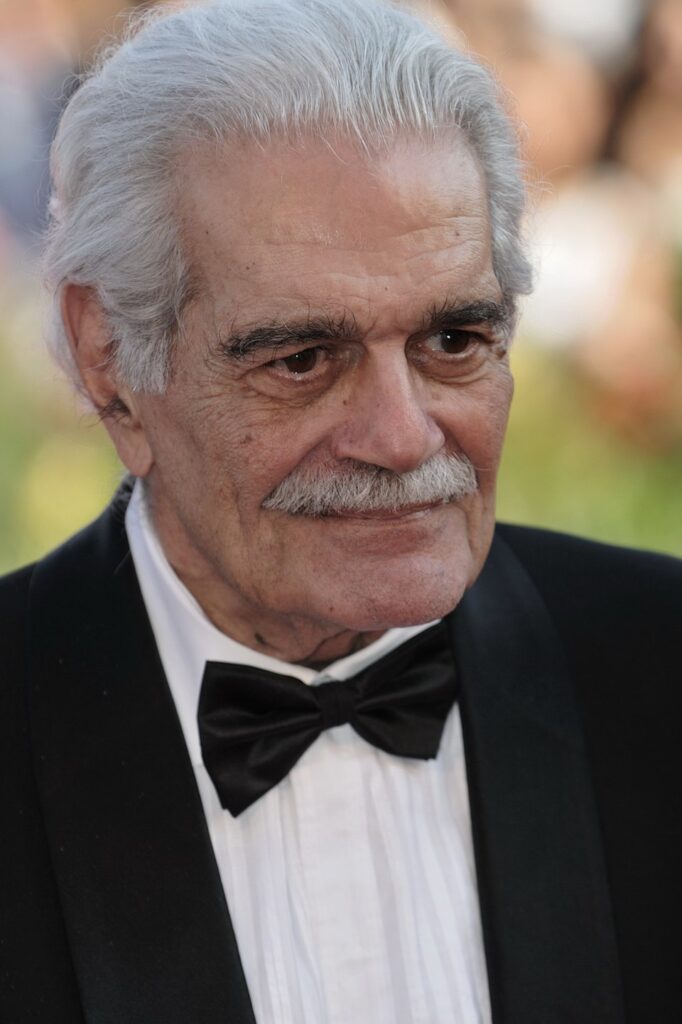
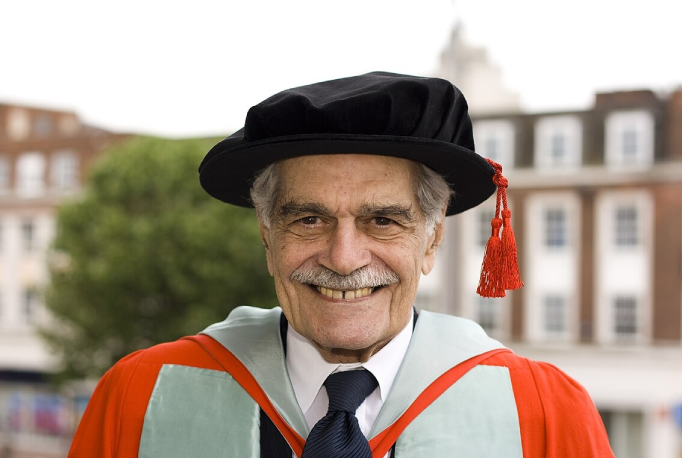
Omar Sharif, born Michel Demitri Shalhoub on 10 April 1932 in Alexandria, Egypt, was an internationally acclaimed actor whose career bridged the cinematic worlds of Egypt and Hollywood. Whilst engaging with EMMA, he supported EMMA’s objectives and wished this was around during his early career to promote social cohesion within society and above all in the creative industries, as he had done throughout his career by breaking barriers for Minorities.
Raised in a wealthy Melkite Greek Catholic family of Syrian and Lebanese descent, Omar was educated at Victoria College in Alexandra, where he became fluent in several languages, including Arabic, English, French, Greek, and Italian. He later studied mathematics and physics at Cairo University before training in acting at the Royal Academy of Dramatic Art (RADA) in London.
Omar began his film career in Egypt in the early 1950s, starring in Youssef Chahine’s 1954 film The Blazing Sun. His performance launched him to stardom and led to his marriage to Egypt’s leading actress, Faten Hamama, a celebrated love story in the Arab world.
Omar’s international breakthrough came when director David Lean cast him as Sherif Ali in 1962’s Lawrence of Arabia. This role earned him an Academy Award nomination for Best Supporting Actor and two Golden Globe Awards, immediately establishing him as a major new star in Hollywood at the time.
Omar solidified his status as a romantic and dramatic leading man with his unforgettable portrayal of Yuri Zhivago in Lean’s sweeping 1965 epic Doctor Zhivago, winning another Golden Globe and captivating audiences worldwide.
Throughout the 1960s and 1970s, Omar continued to build an impressive international filmography, with roles in 1968’s Funny Girl alongside Barbra Streisand, 1969’s Mackenna’s Gold, 1974’s The Tamarind Seed alongside Julie Andrews, and 1976’s The Pink Panther Strikes Again, among many other films. These roles showcased his effortless charm, emotional depth, and commanding screen presence.
Beyond acting, Omar was a world-class bridge player, ranked among the world’s best. He co-wrote several books on bridge and launched the popular “Omar Sharif Bridge” computer game.
Despite his global success, Omar maintained strong ties to his Egyptian roots, appearing in later Egyptian films and earning the admiration of audiences in his home country and across the Arab world.
In 1999, Omar performed in the hit film Thirteen Warriors with Antonio Banderas. The film is credited as pioneering a Muslim hero in Hollywood, which is rarely seen then and now.
Throughout his illustrious career, Omar received numerous honours, including the French Legion of Honour and Egypt’s prestigious Order of Merit, celebrating his contributions to cinema and culture.
In his later years, Omar made poignant appearances in films such as 2003’s Monsieur Ibrahim, for which he won the César Award for Best Actor. This demonstrated his enduring talent and humanity. He lived a life marked by artistry, sophistication, and a rare ability to connect with audiences across cultures and generations.
Omar Sharif sadly passed away in Cairo on 10 July 2015, at the age of 83, after suffering a heart attack. He was widely mourned around the world.
Omar is still remembered not only for his unforgettable performances but also for his role as a cultural bridge between East and West and his extraordinary legacy in the history of world cinema.