Darcus Howe
EMMA Supporter
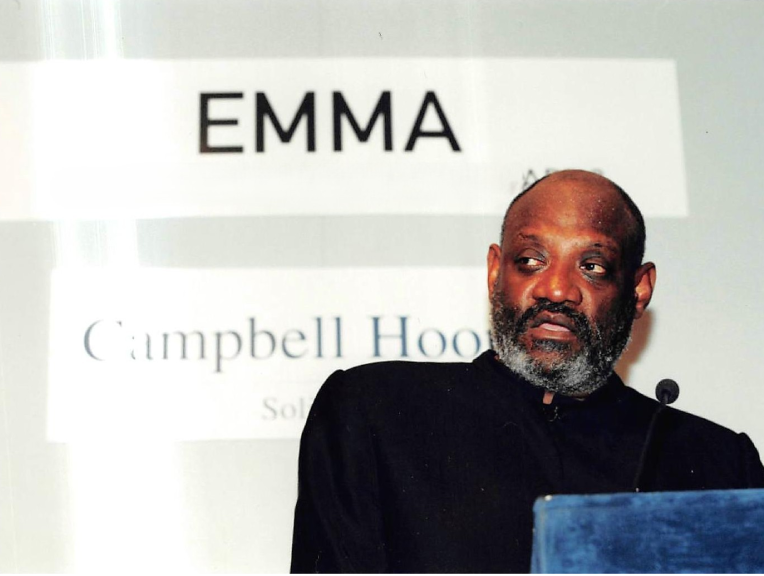
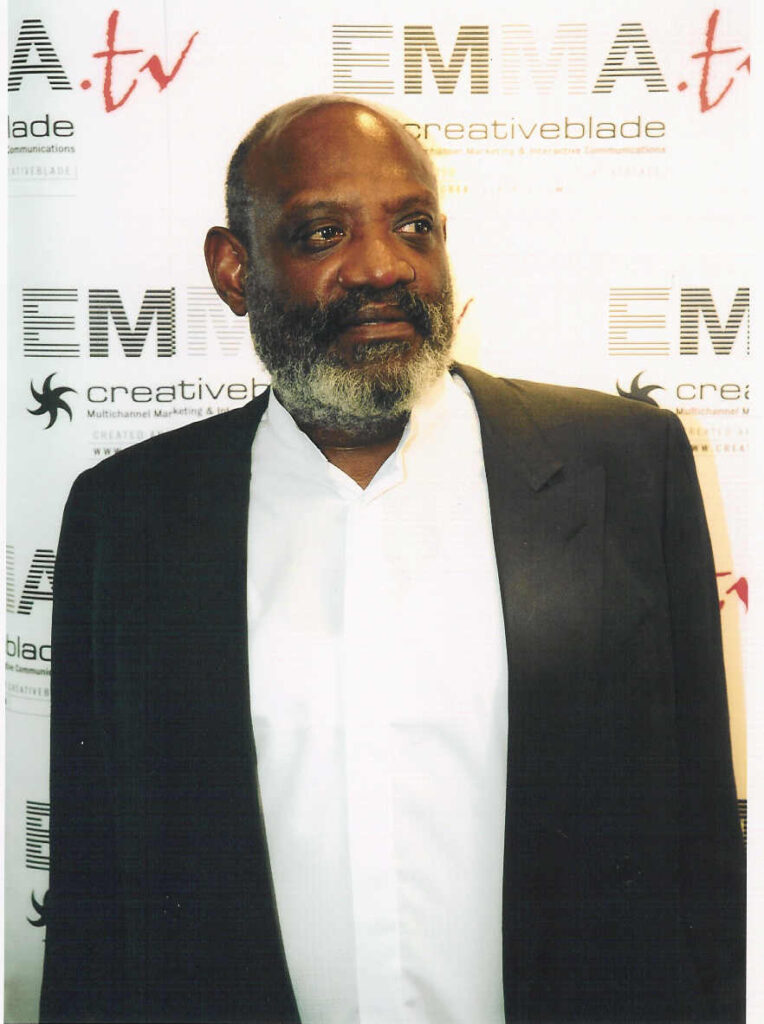
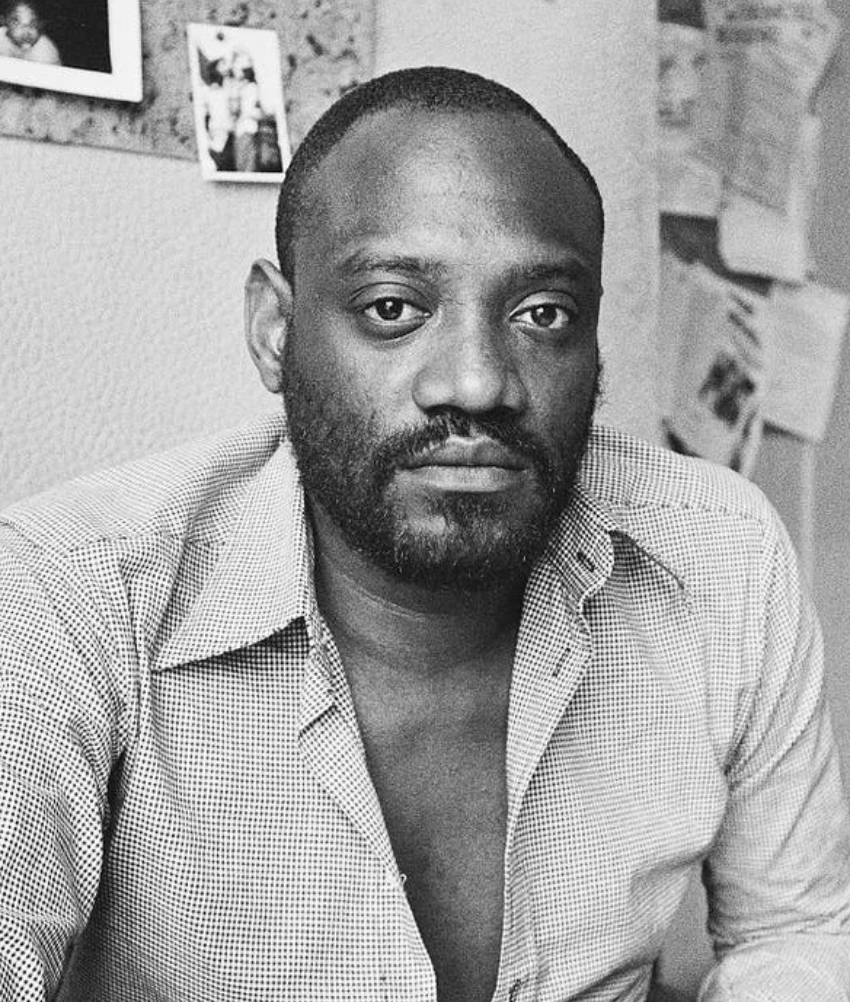
Darcus Howe was born as Leighton Rhett Radford on 26 February 1943, in Moruga, Trinidad. He was a groundbreaking British broadcaster, writer, activist, and prominent figure in the UK civil rights movement. He was the first presenter of the EMMA Show at the Dorchester Hotel in May 1998 alongside Lisa Aziz. Darcus supported EMMA’s objective to promote social cohesion within society and the creative industry as EMMA was the first ever Creative Industry show.
Moving to the UK in 1961 at the age of 18, Darcus was exposed to the harsh realities of racism in British society, which led him to become deeply involved in activism. Initially, he planned to pursue law as a Barrister but shifted focus after encountering systemic discrimination, eventually becoming a prominent voice for the Black community.
In the early 1970s, Darcus became a leading figure in the British Black Panther movement, advocating for Ethnic Minorities and defending their need for equal rights. His activism reached its peak in 1970 when he became one of the Mangrove Nine, a group of Black activists who were arrested after protesting police harassment at the Mangrove restaurant in Notting Hill, a hub for the Caribbean community.
The subsequent trial became a landmark moment in British legal history as it was the first case in the UK where the courts recognised racial discrimination by the police, and it brought attention to the ongoing struggles of Ethnic Minority people in Britain.
In addition to his activism, Darcus was a founding member of Race Today. This radical publication provided a platform for Minority political discourse, and he later became the magazine’s editor. Throughout the 1970s and 1980s, Darcus used his writing and public speaking to challenge the racial inequality he saw in Britain.
Darcus was instrumental in organising the 1981 Black People’s Day of Action, which demanded justice after the New Cross fire tragedy, where 13 Black teenagers lost their lives in a fire that was widely believed to have been racially motivated.
Darcus’ influence was not confined to activism alone; he also became a key figure in British media. He hosted Channel 4’s Black on Black, a program that brought attention to African Caribbean community issues, and Devil’s Advocate, a current affairs show known for its sharp, confrontational style. He also co-presented Bandung File, a program created with Tariq Ali, which examined post-colonial politics and international affairs from a critical perspective. Darcus’ 2004 documentary “Who You Callin’ a N*****?, explored the changing face of racial politics in Britain and the increasing division among ethnic minority groups.
Darcus’ writing also extended to books, where he explored themes of race, identity, and political activism. His works, such as 2000’s “White Tribe” and 2001’s “Slave Nation”” critiqued the continued marginalisation of Black people and addressed the complexities of racial identity in modern society. His 2006 book “Is This My Country?” explored issues of belonging and alienation within the context of the UK’s complex racial and colonial history.
Darcus was also an outspoken advocate for Black representation in the media and the arts, influencing a new generation of Black creatives and thinkers. Throughout his life, he maintained a personal commitment to activism and social justice, often challenging the status quo with his provocative, unapologetic approach.
Darcus’ personal life was equally impactful. He was married to Leila Hassan, an activist and editor, with whom he had a daughter, Tamara Howe, who became a prominent media executive. He also had a son, Darcus Beese, who became the first Black CEO of a major UK record label, Island Records. Besides being married three times with seven children, his whole family played a significant role in his legacy, with his children continuing his work in various ways.
After being diagnosed with prostate cancer in 2007, Darcus used his diagnosis to advocate for men’s health, particularly within the Black community, encouraging open discussions about health and wellness. He remained active in public life even after his diagnosis, continuing to work, speak, and engage in his passion for racial equality until his death.
Darcus worked with EMMA to participate in a conference on the London 2011 riots held at the University of London. The riots, caused by the 2008 economic crash due to the banking crisis, could have jeopardised the London 2012 Multicultural Olympic Games the following year.
Darcus Howe passed away on 1st April 2017, at 74, in Streatham, London, leaving a profound legacy as one of the most important figures in British civil rights history.
Darcus’ work resonates today, particularly in activism, media, and contemporary culture. His contributions to British civil rights and his unyielding fight for racial justice paved the way for future activists and thinkers.
Darcus Howe’s lasting impact can be seen not only in his children’s work but also in the broader societal conversations about race, identity, and systemic injustice that continue to shape public discourse. His legacy as an intellectual, a media figure, and a passionate advocate for Human rights ensures his place as a towering figure in both British and global civil rights history.