Anti-Racism Conference


EMMA PR/MEDIA contacted Mr Greg Clarke (Chairman of The Football Association) & Mr Theodore Theodoridis (UEFA, General Secretary) on 18th August 2018 and followed up on 20th December 2018 to organise an anti-discrimination conference to tackle the continued racism in football that was eventually held by them both on 2nd and 3rd April 2019 at Wembley Stadium – as this symbolised the home of football. EMMA is proud to be the catalyst for this conference.
EMMA had contacted HRH Prince William (current Prince of Wales), Duke of Cambridge (who is then and now President of The FA), The Rt. Hon. Theresa May MP (Then Prime Minister), Mr Mark Bullingham (CEO of The Football Association); Mr Shaun Harvey (Chief Executive of The Football League); Ms Debbie Jevans CBE (Executive Chair of The Football League) alongside all the Football Clubs in the Premier League and EFL Championship. This assisted the “Equal Games Conference in the fight against anti-discrimination,” as EMMA has been working on anti-racism campaigns since 1997. EMMA is grateful for all party’s contributions to this conference.
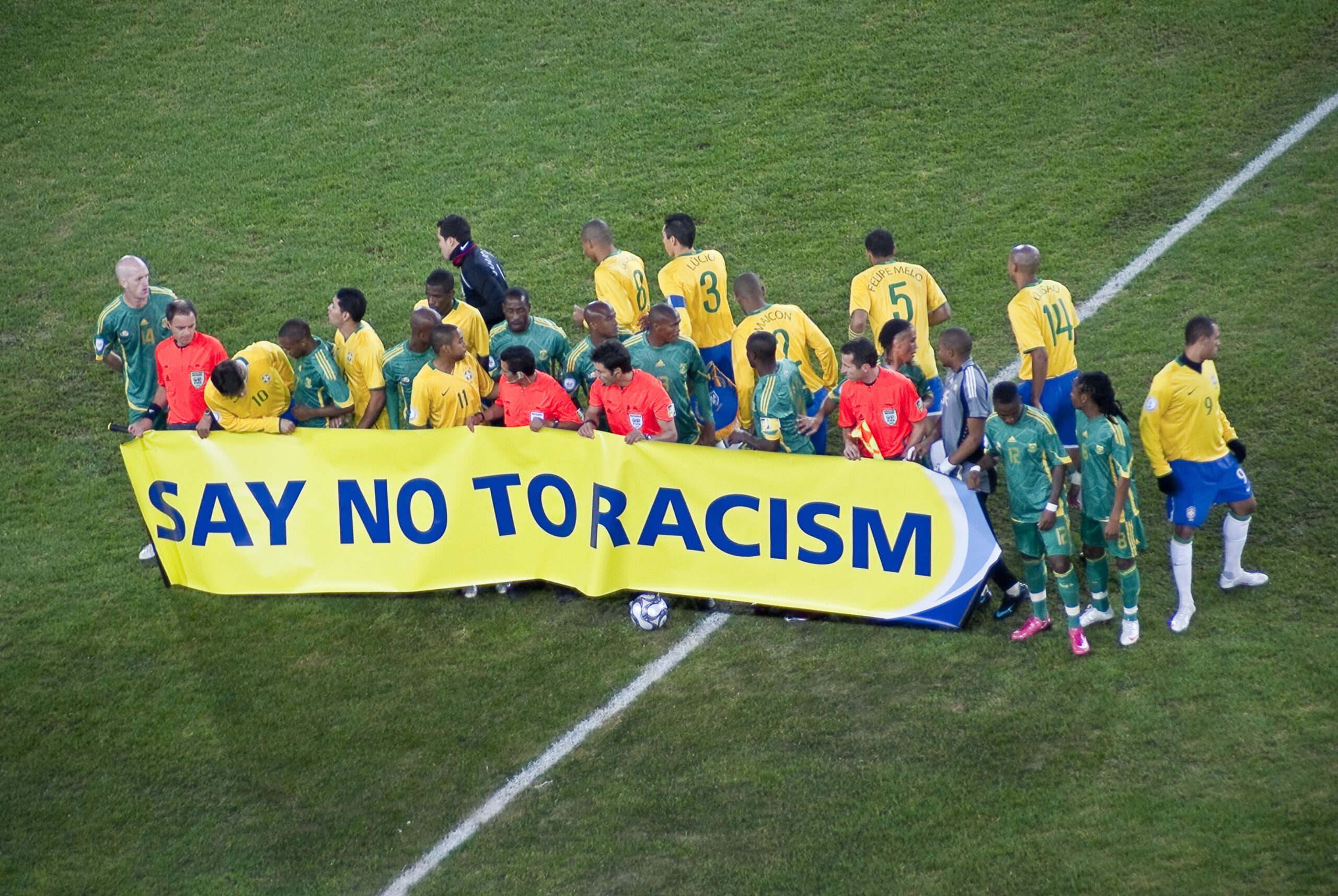
The event brought together 260 delegates from UEFA member associations, league clubs, political and governmental organisations, non-governmental organisations (NGOs), and minority groups, as well as relevant experts and media representatives, to address all aspects of racism and discrimination in football. Racism had increased, with bananas being thrown at English Afro-Caribbean players during Football matches when representing their country and their football clubs when playing in Europe. This blatant discrimination could not continue anymore.
FA (Football Association) Chairman Greg Clarke said, “Tackling discrimination and intolerance in our game is a unified effort. We are delighted to welcome our partners at UEFA (Union of Europeans Football Associations) and Fare (Football Against Racism in Europe) to Wembley Stadium for the Equal Game Conference. We will come together to discuss the important role we can all play in ensuring our game is inclusive and for all.” England enjoyed success at the FIFA (Federation International Football Association) 2018 World Cup in Russia, finishing in the top four. They became the second-youngest squad, alongside France, who went on to win the World Cup. Both of these respective teams had a strong multicultural setup, with France, who had similarly gone on to win the World Cup in 1998 in familiar fashion against Brazil. England introduced a similar multicultural setup in 2018. The desire to win the World Cup was total, as there was a similar determination to win the World Cup like France, regardless of race or colour.
The UEFA Equal Game Conference aimed to celebrate our Multicultural values in the Football environment, with leading speakers from around the world sharing their perspectives on those issues. Many have become recent leaders in the entertainment industry from within the Football (Soccer) world, with others who are seen as foot soldiers and play the game on a weekly basis. The opportunity to debate this “Beautiful Game,” as defined by Pele, is now overwhelming: to learn from one another, share ideas, and discover the proper direction this global sport should take.
The Multicultural roots of Football are undeniable, with even FIFA recognising that it originated in China as CUJU (Kick Ball). However, much later on, Sheffield FC became the oldest Football Club in Britain and helped to form the present-day Football rules. The laws of the game were codified in England by ‘The Football Association’ in 1863. The fact that many football pioneers at the time were ethnic minorities somehow doesn’t seem to register with those racist football fans. For them, football is seen as this ‘White’ bastion sport in a historical sense, with previous strong Far-Right political culture from the 1960s, 70s and 80s becoming a regular feature in the football terraces. In certain football quarters, there is this nostalgia for those racist chants, with Alt-Right politics rising through North America and Europe. Will this once again infiltrate the heart of our British culture, acknowledging that football represents a social fibre of our society?
HRH Prince William, in a speech to celebrate his ten-year tenure as the F.A President stated, “Football is England’s national game; it is part of the fabric of this nation, and to a large degree, it helps form England’s national identity.” This football culture is so deeply ingrained and intertwined that many fans swear loyalty to their preferred club before their country. This could be due to England’s lack of success since 1966 or perhaps the Football Association’s (F.A) disconnect with football supporters, which hinders broader inclusion by not reflecting their culture or community beyond the football clubs, as most football clubs represent urban areas.
England’s 2018 World Cup squad was celebrated for being the first to have a core team from Northern England and a significantly higher number of Ethnic Minorities. This seemed to reflect modern England, which encouraged a more extensive support base among Ethnic Minorities that grew and became more vocal in attending matches. However, beneath the surface, there still seems to be criticism that there is still specific racism towards England’s ‘Ethnic Minority’ players. This was publicly aired by former England player Ian Wright, who had said that the continuous criticism aimed at England’s Raheem Sterling was motivated by racism.
When England wins, these Ethnic Minority players are celebrated as being English, and when England loses, they’re seen as foreigners with reference to their parent’s previous heritage. It should be noted that the debate about whether racism is rooted within society or inside football is totally academic. All forms of racism should be eradicated as it’s corrosive to national unity.