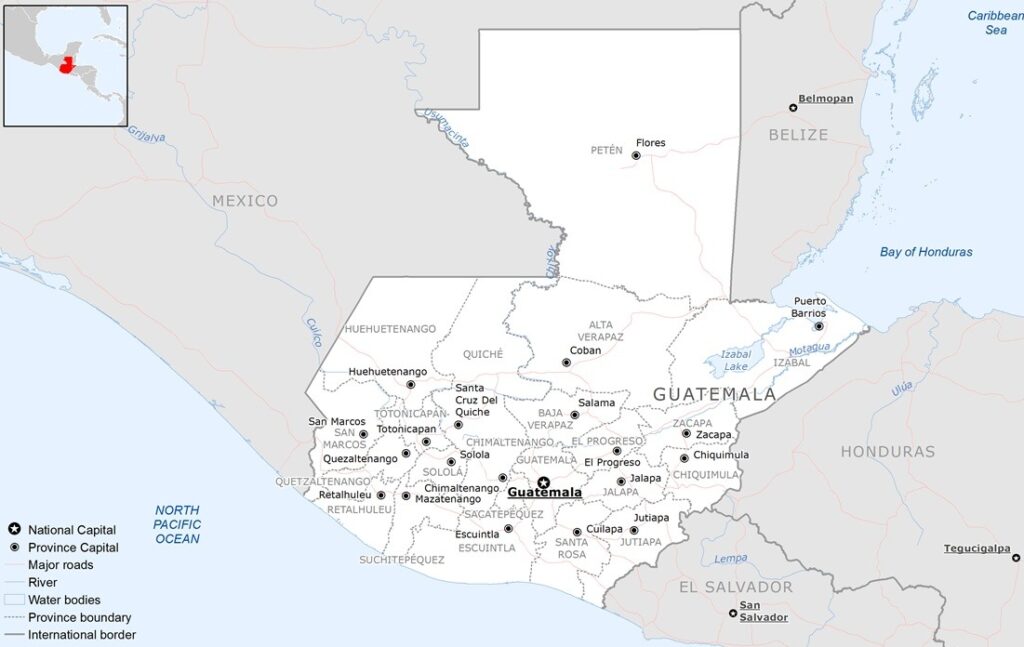
During World War II, Guatemala maintained a position that aligned with the Allied powers, declaring war on the Axis powers on 9th December 1941, following the attack on Pearl Harbor.
Domestically, the war period brought about notable economic and social changes. The Guatemalan government seized properties owned by German nationals, redistributing them to local entities, which altered the economic landscape. This expropriation targeted coffee plantations and other businesses, aiming to reduce German influence in the country. Despite these internal shifts, Guatemala did not experience direct combat or large-scale military mobilization during World War II, resulting in minimal civilian or military casualties related to the global conflict.
The subsequent Guatemalan Civil War, which took place from 1960 to 1996, had a profound and devastating impact on the nation. This 36-year internal conflict led to the deaths or disappearances of over 200,000 individuals, with approximately 83% of the victims identified as indigenous Maya.
The violence perpetrated during this period included the destruction of 626 villages and the displacement of an additional 1.5 million people, while more than 150,000 were driven to seek refuge in Mexico. Indigenous women were systematically subjected to rape and enslavement by the military, as evidenced by the Sepur Zarco case, where 15 women fought for justice, resulting in the conviction of 2 former military officers for their crimes against humanity.
Estimates suggest that the conflict resulted in 40,000 to 80,000 widows and 150,000 to 250,000 children who lost at least 1 parent. The economic ramifications of the civil war were severe and disrupted agricultural production, leading to food shortages and economic instability.
Infrastructure destruction further hampered economic development, and the widespread violence deterred foreign investment. The war’s legacy continues to affect Guatemala’s society today, with high levels of poverty, especially among indigenous populations, and ongoing challenges in addressing past human rights violations.
(Never Again – for Humanity)